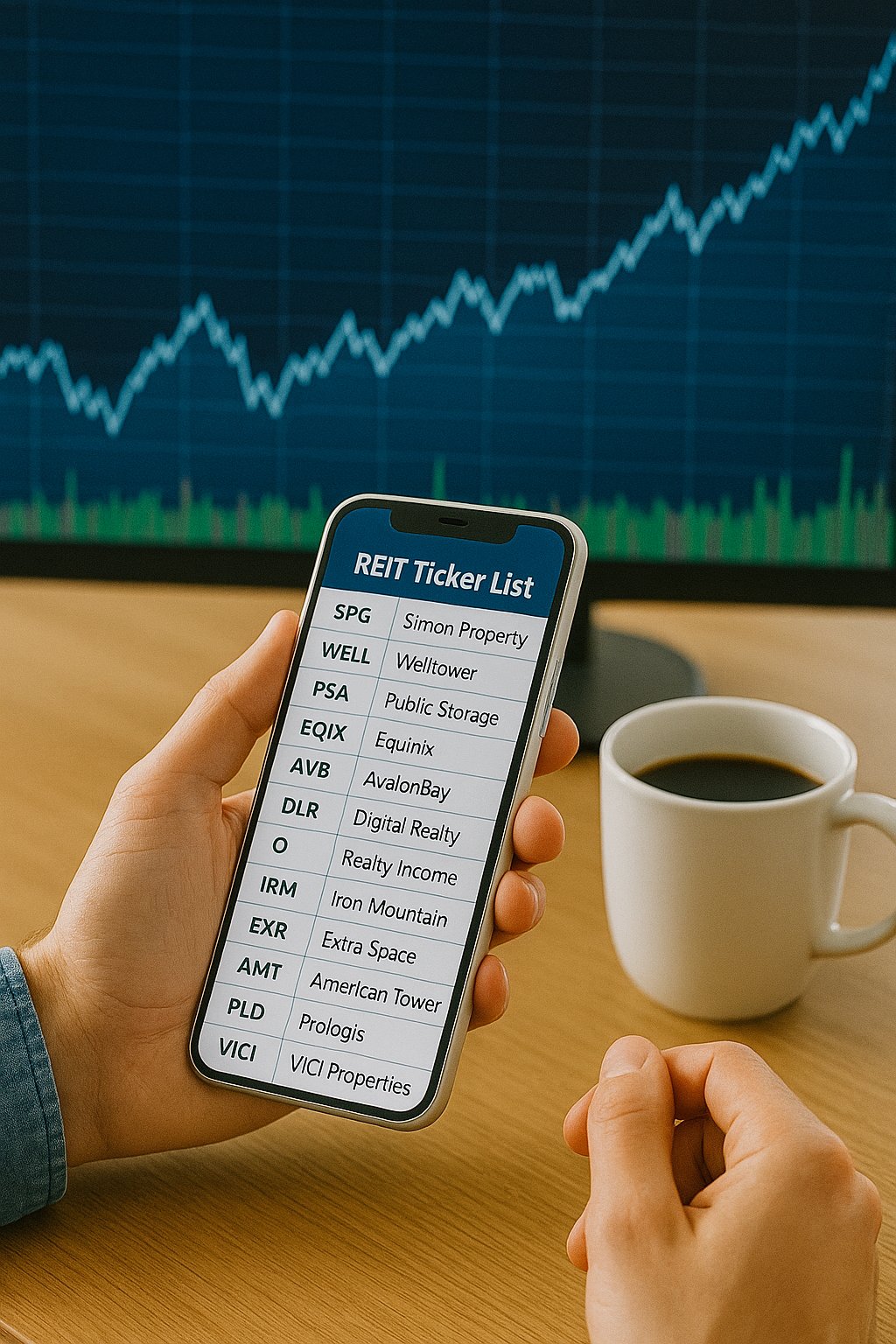
A REIT—Real Estate Investment Trust—is one of the easiest ways to invest in real estate without buying, managing, or financing a property yourself. If you want real estate returns but not the landlord responsibilities, REITs are worth paying attention to.
What Exactly Is a REIT?
A REIT is a company that owns, operates, or finances income-producing real estate such as:
-
Apartment complexes
-
Shopping centers
-
Office buildings
-
Warehouses
-
Data centers
-
Hotels
-
Medical facilities
When you invest in a REIT, you’re buying shares of the company—similar to buying a stock. In return, you earn dividends (often higher than typical stocks) and may benefit from the appreciation of the REIT’s share price over time.
How REITs Work
Here’s the simple breakdown:
-
You buy shares through your brokerage account (like buying stocks).
-
The REIT uses that money to buy or manage income-producing properties.
-
Instead of keeping the profits, the REIT is legally required to pay out at least 90% of its taxable income to investors in the form of dividends.
-
You collect passive income—without dealing with tenants, maintenance, or loans.
Why Investors Like REITs
✔ Low Barrier to Entry
Start with as little as $10–$100 depending on the platform. No massive down payment required.
✔ Liquidity
Unlike physical real estate, REIT shares can be bought or sold instantly, just like stocks.
✔ Diversification
Own a mix of property types (residential, commercial, industrial) across different regions.
✔ Passive and Hands-Off
Perfect for people who want the benefits of real estate but no direct management or repairs.
✔ Strong Dividend Potential
REITs are popular among income-focused investors because of their consistent cash payouts.
Who REITs Are Good For
REITs may be a great fit if you:
-
Want real estate exposure without large upfront costs
-
Prefer passive income
-
Don’t want to manage tenants or contractors
-
Like the liquidity of stock-like investments
-
Want to diversify beyond traditional stocks
They’re also ideal for beginners looking to dip their toes into real estate before buying a rental property.
REITs vs. Owning Rental Property
|
REITs |
Rental Property |
|
Low upfront cost |
High down payment |
|
Fully passive |
Hands-on management |
|
Highly liquid |
Harder to sell |
|
Diversified |
One property in one location |
|
Lower control |
Full control |
Both can be strong wealth builders—it depends on your goals, involvement preferences, and financial starting point.